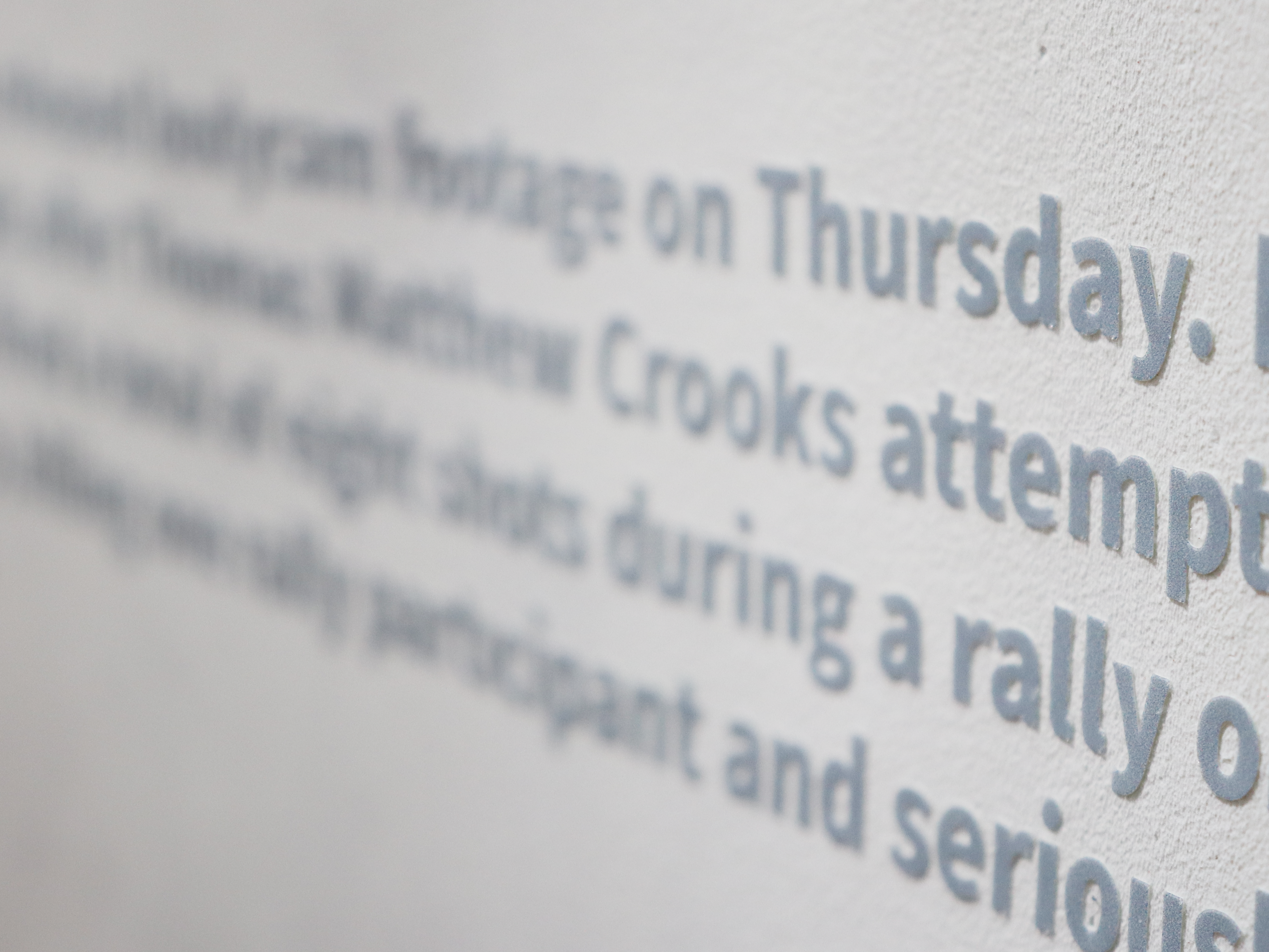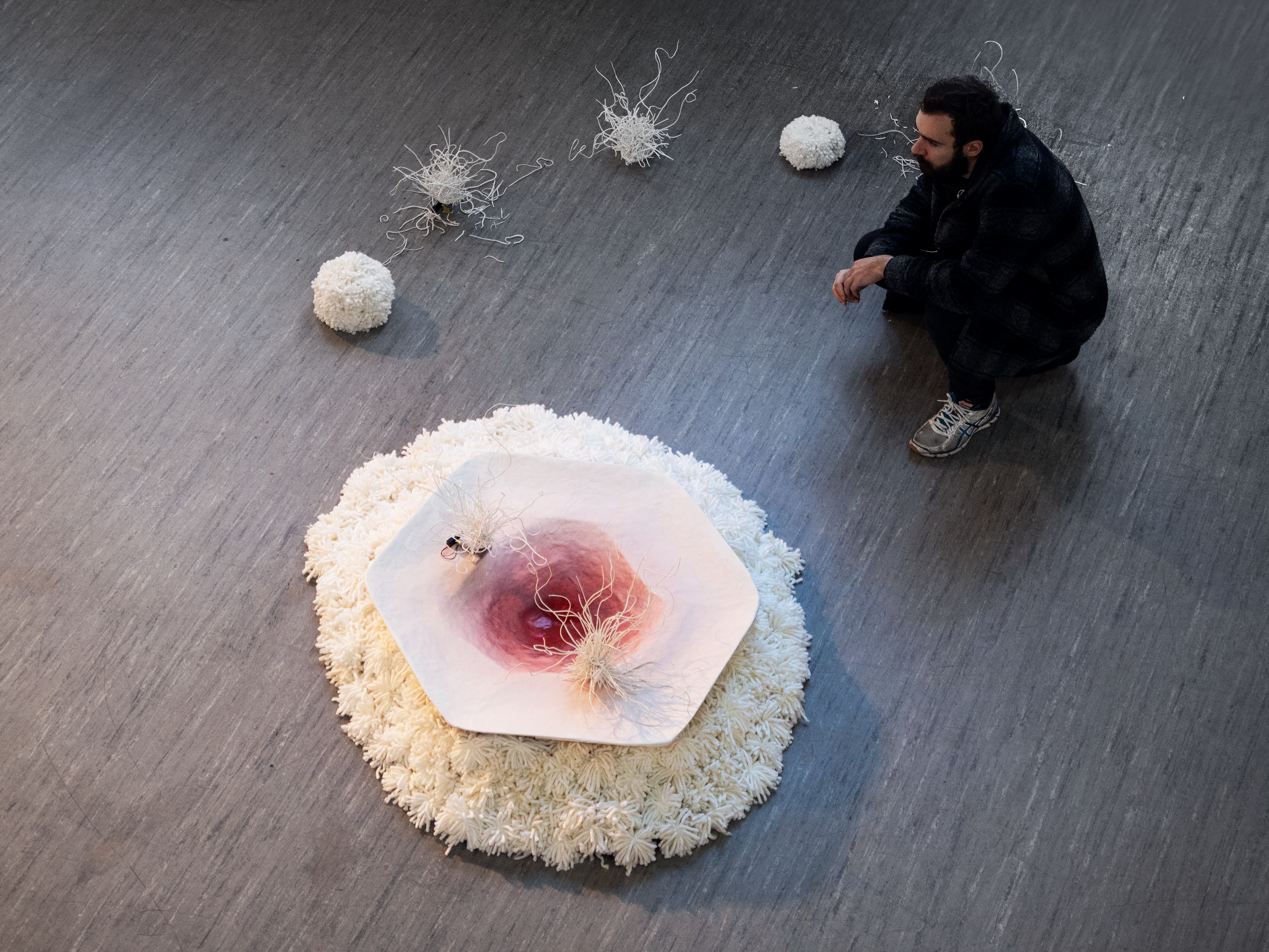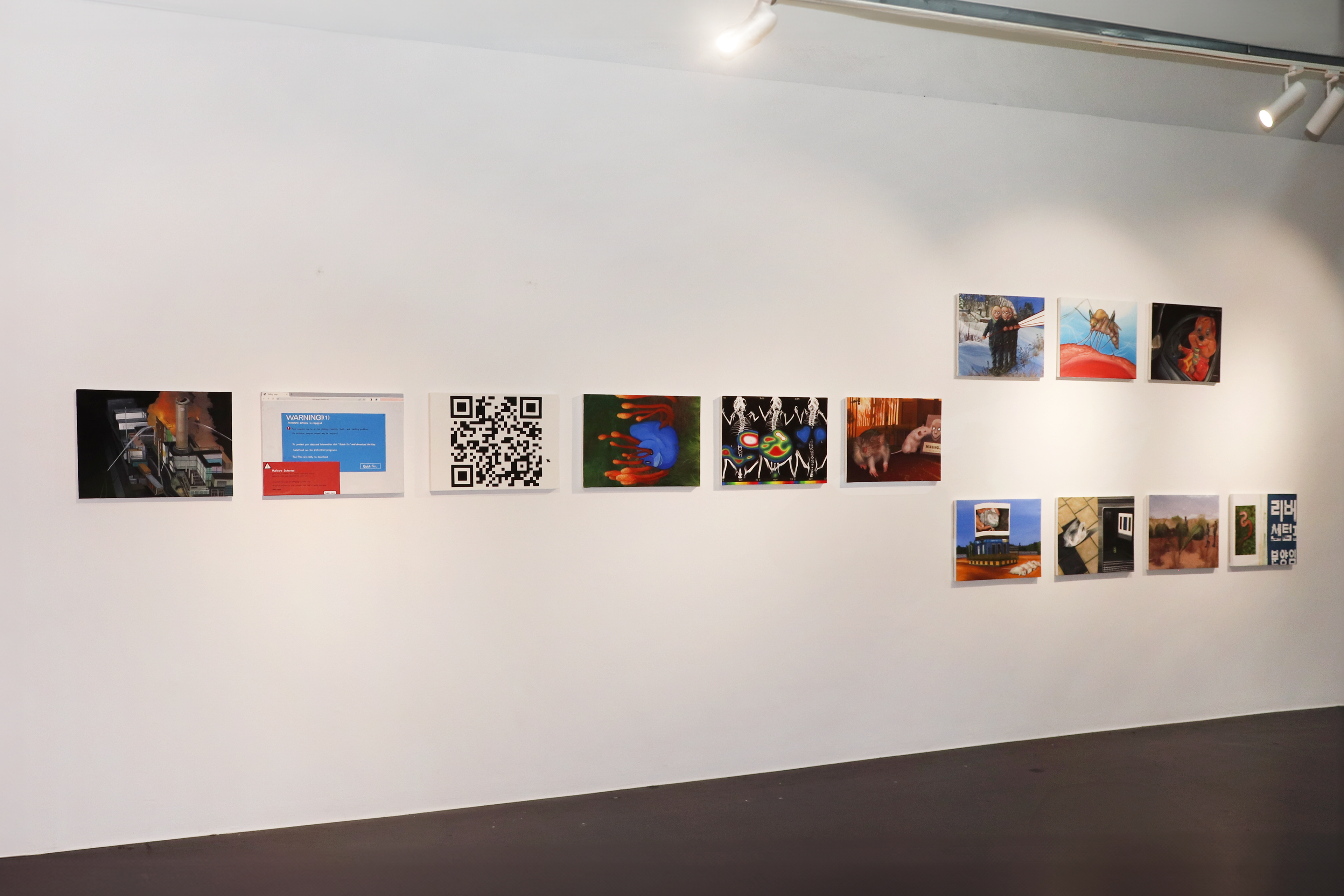
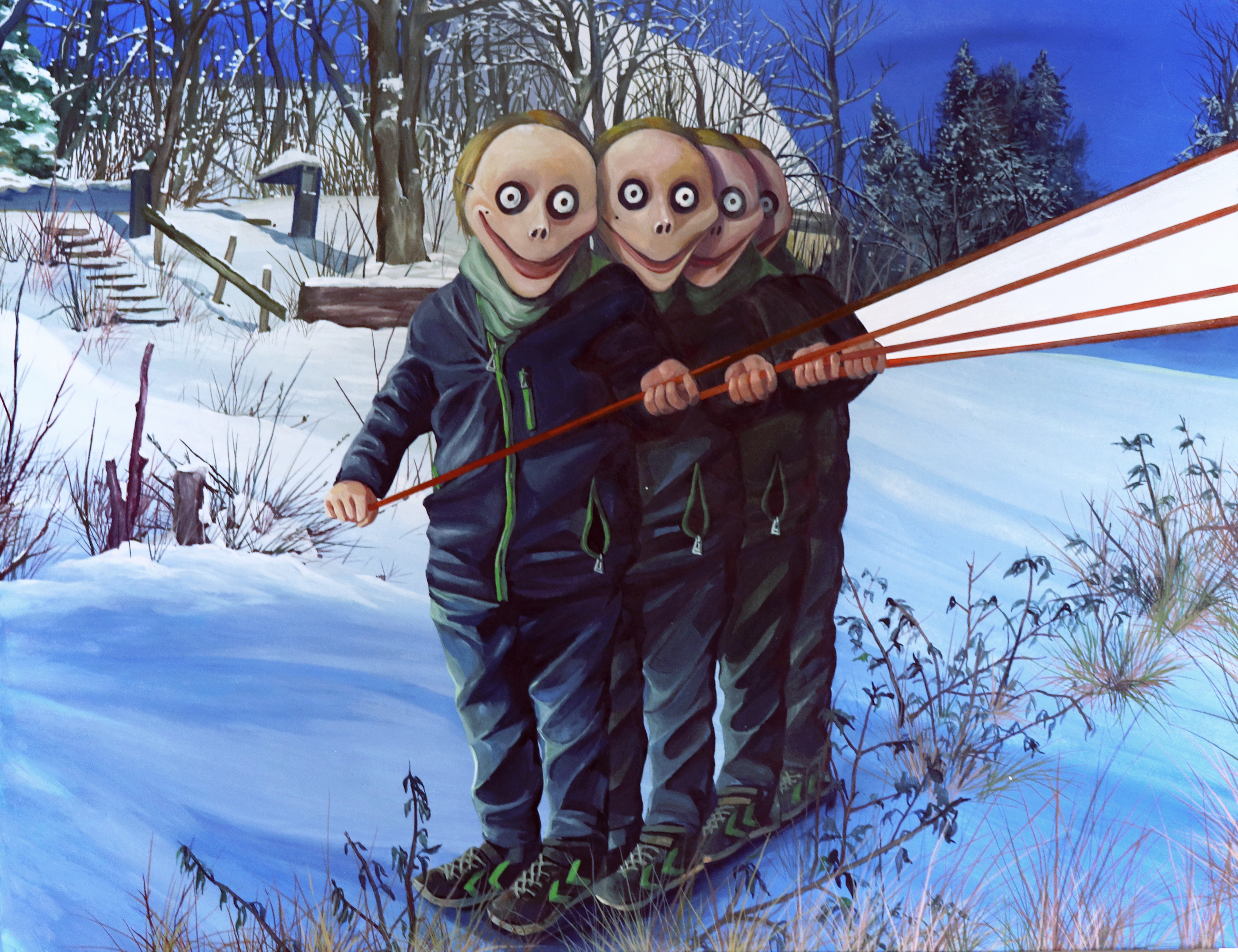
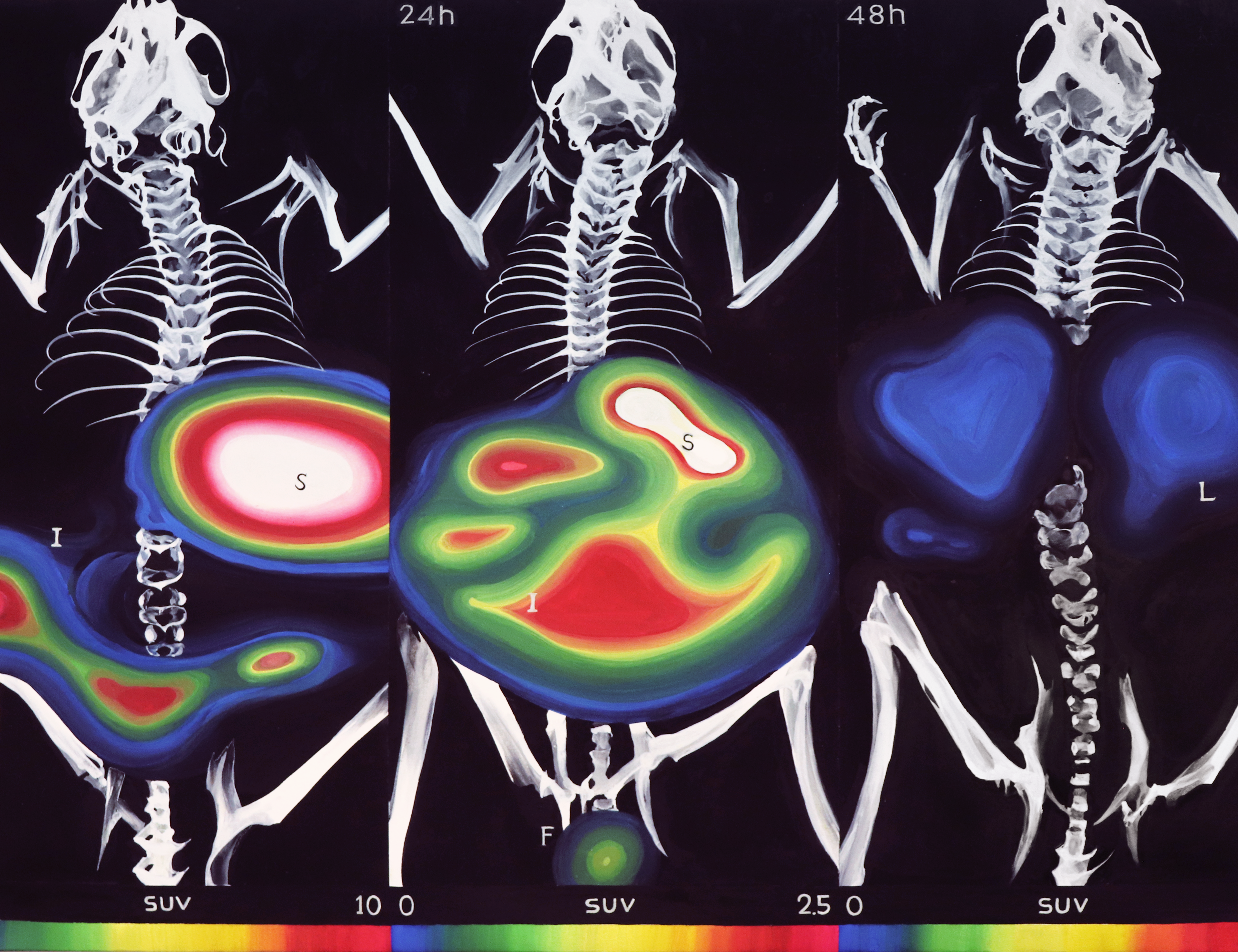
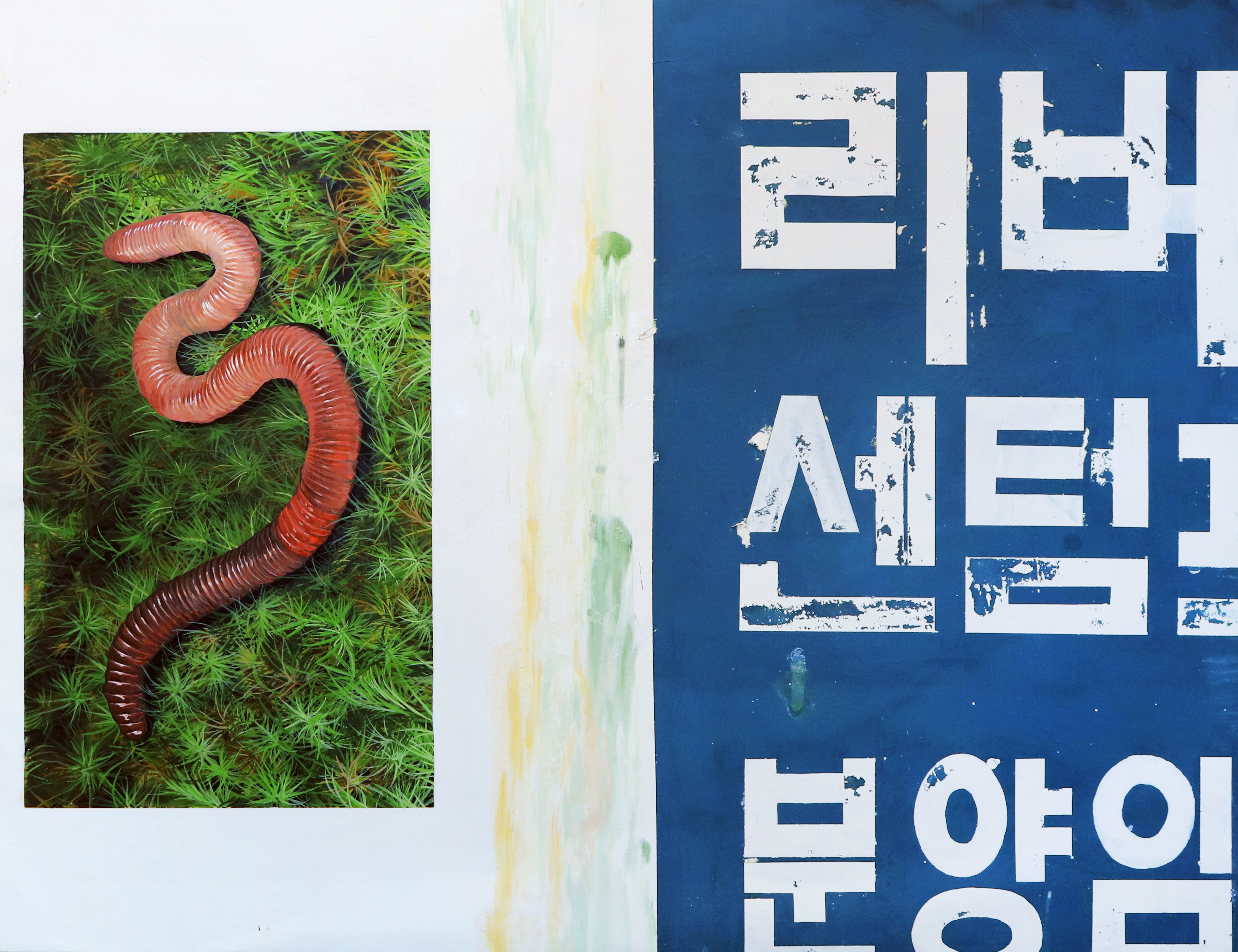
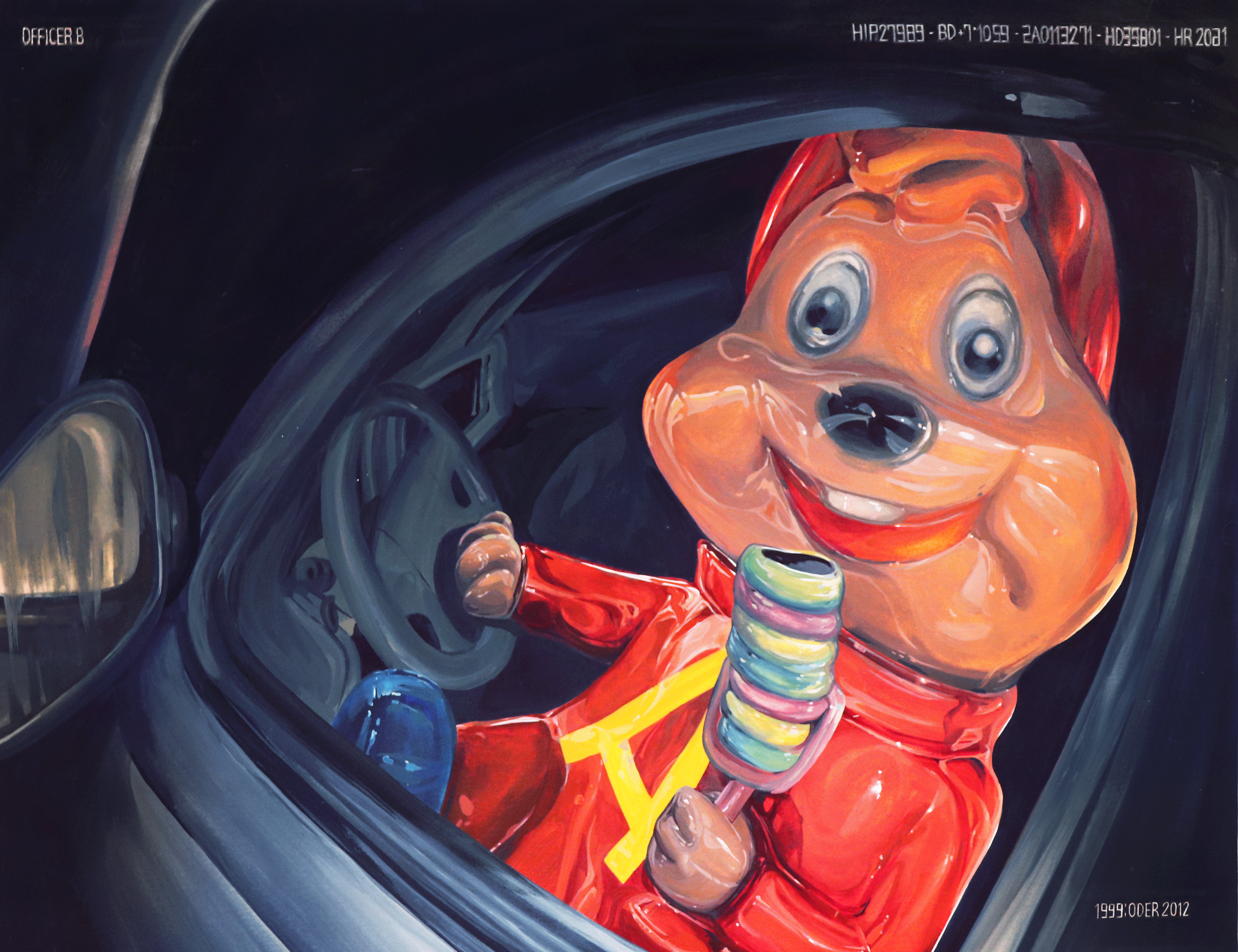
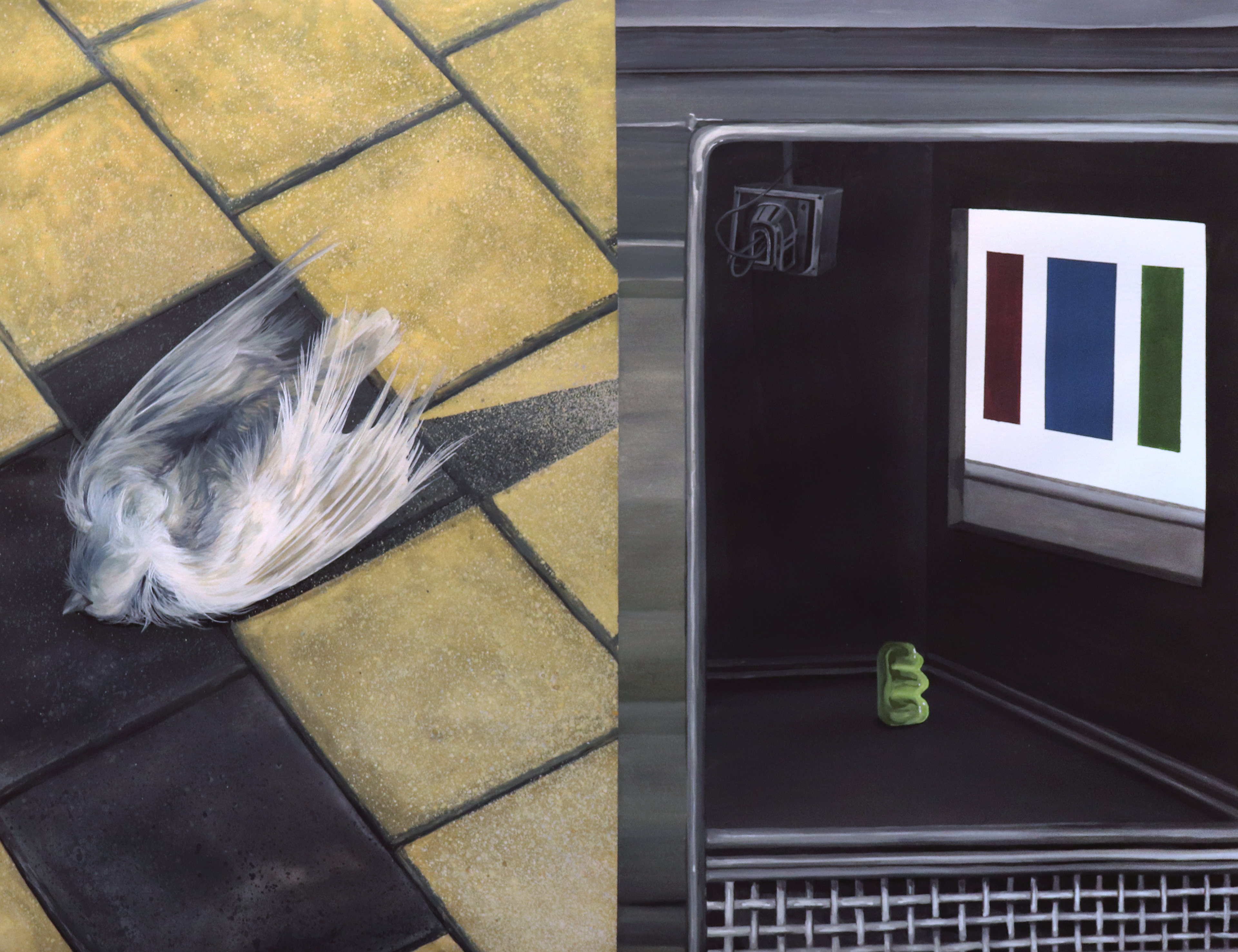
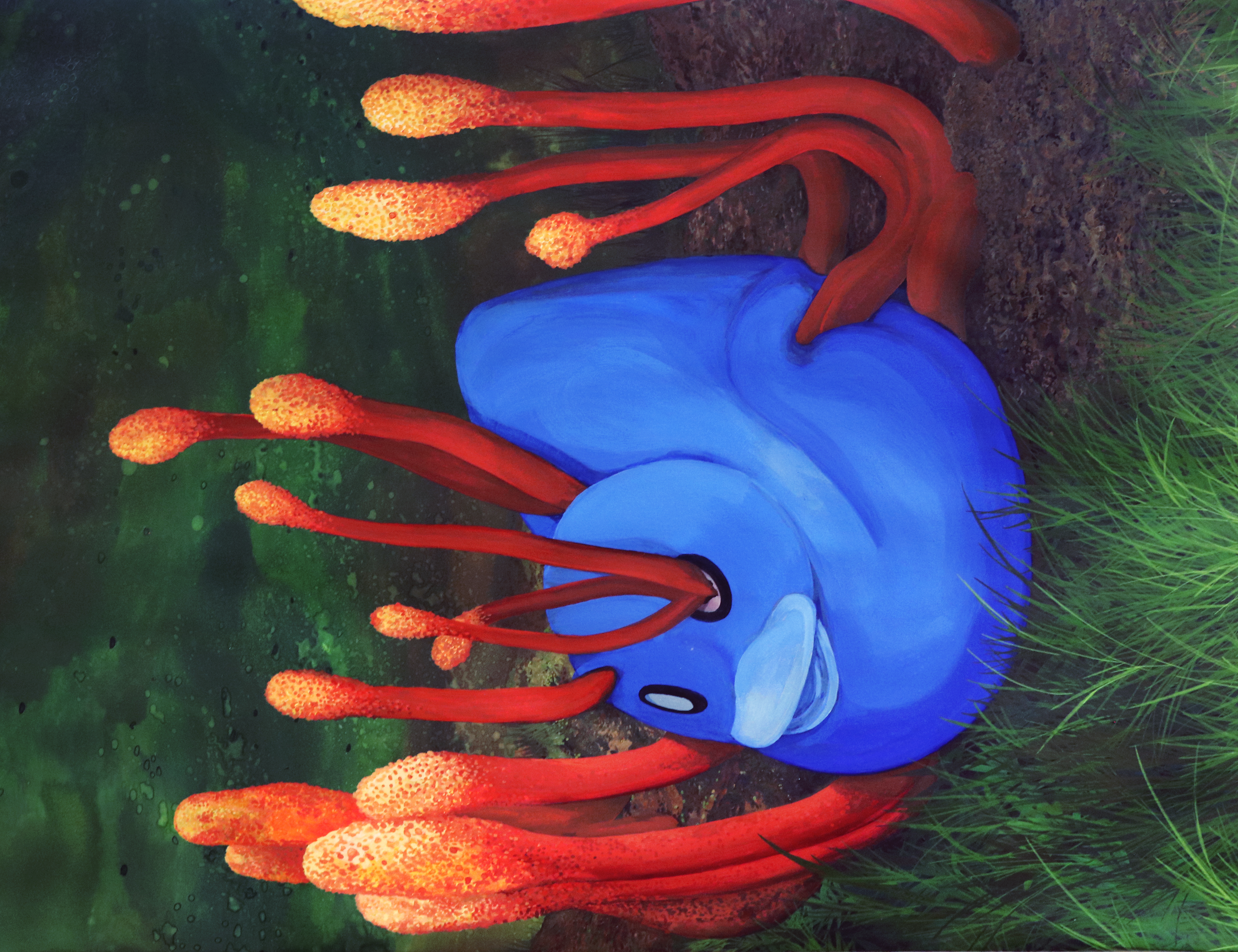
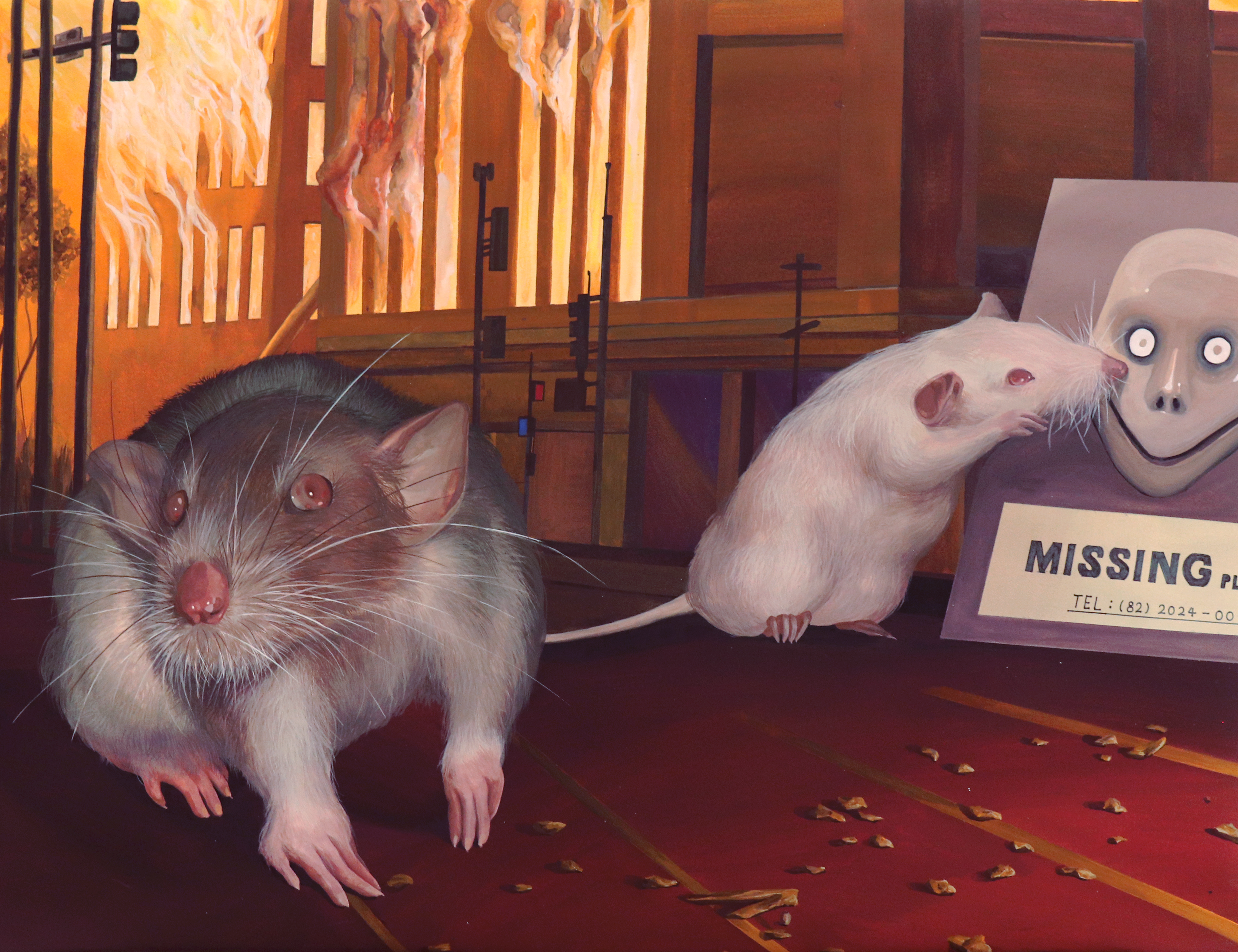
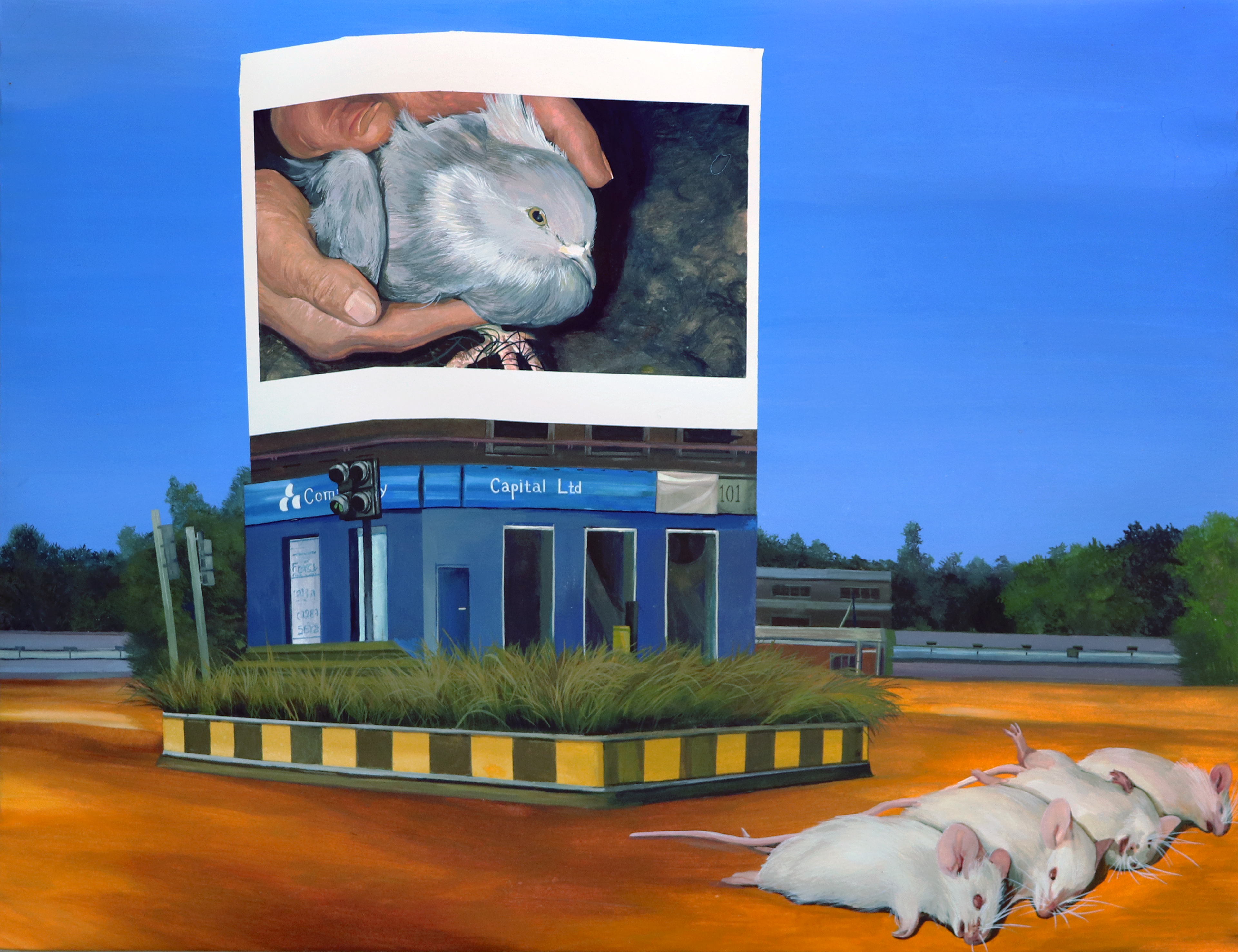
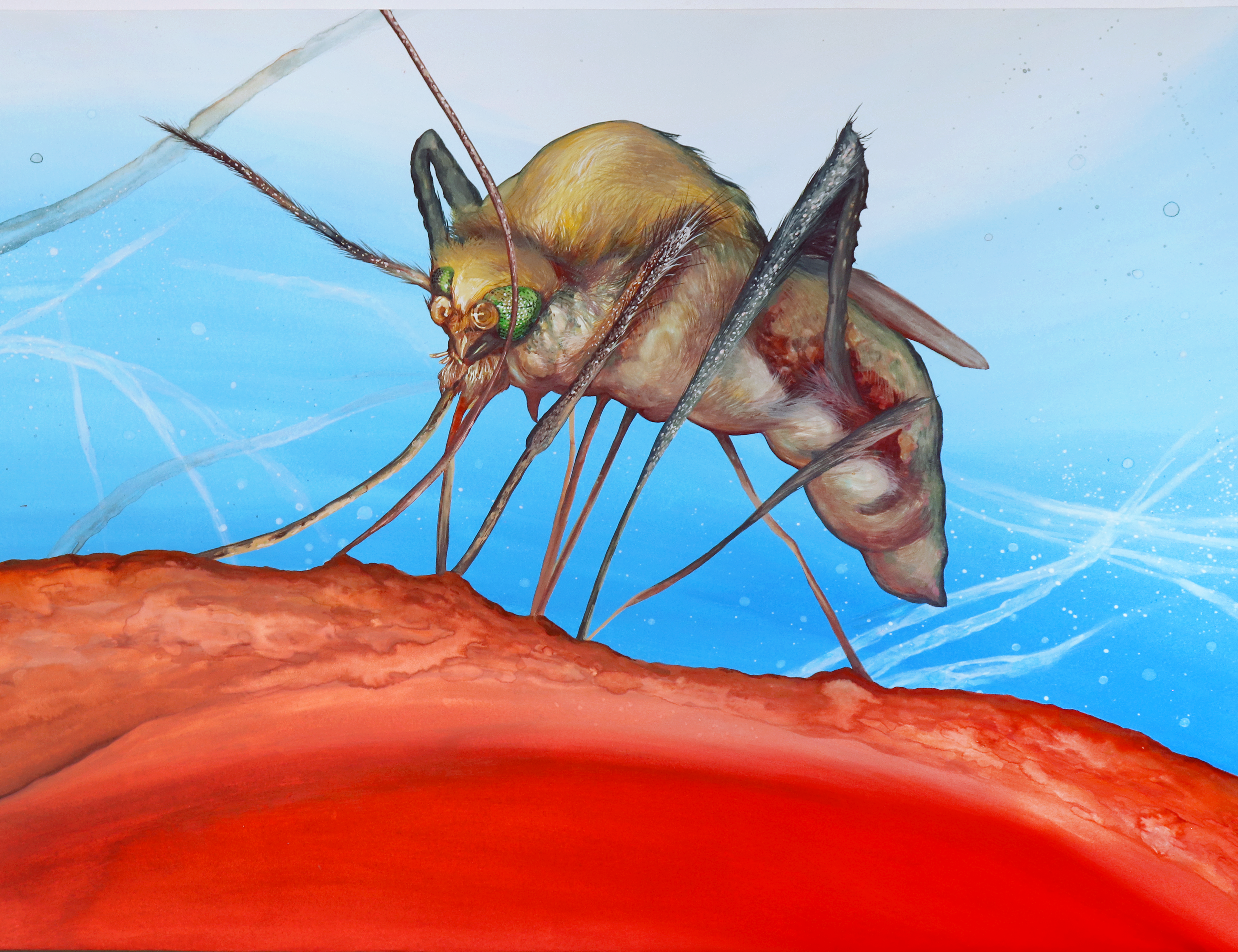
Painting operates on the premise of a “scenario in which entities parasitize and self-propagate through each other.” The images on the canvas do not originate from a single source. News of events and disasters, the exaggerated visual language of advertisements, and fragments cut by surveillance systems attach to one another, proliferating like new lifeforms. In these images, fragments survive before the originals, and within an abnormal cycle where fragments generate narratives in turn, they multiply. I call this cyclical structure the fake box. The fake box is a narrative generating device in the form of imitation, a small system that traverses text and images, summoning sources of different origins. The fake box does not replicate the original. Instead, it dilutes the language of the internet, repeats and transforms images of disaster, and allows fragments to generate stories on their own. Painting is the resulting product, a provisional narrative mass created where replication and self-propagation intertwine.
회화는 ‘서로가 서로에게 기생하며 자생하는 시나리오’를 전제로 작동한다. 화면 속 이미지들은 하나의 출처에서 오지 않는다. 사건과 재난의 뉴스, 광고의 과장된 시각언어, 감시 체계가 절단한 단편적 장면들이 서로에게 달라붙어 새로운 생명체처럼 번식한다. 이 이미지들은 원본보다 파편이 먼저 생존하고, 파편이 다시 서사를 만들어내는 비정상적인 순환구조 속에서 증식한다. 이 순환의 구조를 나는 가짜박스(fake-box)라 부른다. 이것은 모조의 형태를 한 서사 생성 장치이자, 활자와 이미지를 넘나들며 상이한 기원을 소환하는 작은 시스템이다. 가짜박스는 원본을 복제하지 않는다. 대신 인터넷의 언어를 희석하고, 재난의 이미지를 반복·변형하며, 파편이 스스로 이야기를 만들어내도록 유도한다. 회화는 바로 그 결과물, 복제와 자가 증식이 서로 얽히며 만들어낸 임시적 서사 덩어리이다.